Gemstone Gift Buying Guide: Choosing a Birthstone or Anniversary Stone
Buying a gemstone for someone else is a small act of translation. You take a date — a birth month, a wedding anniversary — and turn it into something they can wear. Get it right and it becomes the piece they reach for every morning. Get it wrong and it sits in a drawer. The difference is rarely about spending more. It is nearly always about colour, budget and how well the stone copes with daily life.
Start with the person, then the calendar
Birthstone lists are a framework, not a rule. Before you look at a single stone, think about what the recipient already wears. Do they favour yellow gold or silver-toned metals? Do they wear rings every day, or only for occasions? Is there a colour they return to constantly — deep blue, soft green, warm peach?
If you can, look at their existing jewellery. A quick glance tells you more than any quiz about their colour season. Someone who lives in denim, oatmeal knitwear and silver studs will probably wear a blue topaz or an aquamarine far more often than a fiery orange citrine, however beautiful it is in the tray.
There is also a practical angle. A stone destined for an everyday ring needs a different set of qualities from one headed for a pendant or a pair of earrings. Keep that in mind as you read the rest of this guide.
Birthstones by month
The modern list most jewellers work from runs like this:
- January — garnet, in deep reds through to green
- February — amethyst, from pale lilac to rich purple
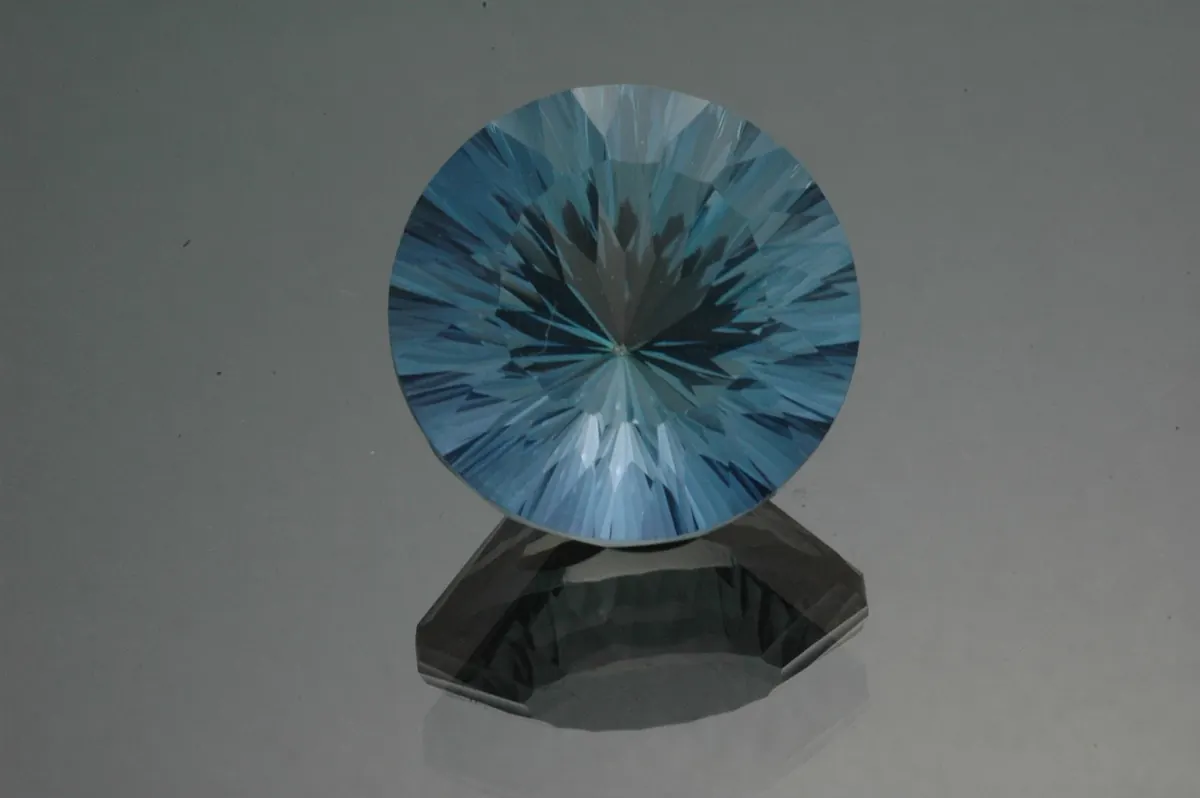
- March — aquamarine, a cool sea blue
- April — diamond, or white sapphire as an alternative
- May — emerald, the classic saturated green
- June — pearl, moonstone or alexandrite
- July — ruby, in reds from pinkish to deep crimson
- August — peridot, or spinel in almost any hue
- September — sapphire, not only blue but also pink, yellow and green
- October — opal or tourmaline
- November — topaz or citrine
- December — turquoise, tanzanite, zircon or blue topaz
Several months offer a choice, which is useful. If emeralds feel too formal, June's moonstone is softer and more affordable. If opal seems too delicate for a ring, October's tourmaline is tougher and comes in more colours than most people realise.
Anniversary stones: the ones worth knowing
Anniversary lists vary between jewellers and between countries, so treat them as a starting point. A few markers come up again and again: garnet for the second, pearl for the third, sapphire for the fifth, amethyst for the sixth, diamond for the tenth, ruby for the fifteenth and fortieth, emerald for the twentieth, silver for the twenty-fifth, gold for the fiftieth and diamond again for the sixtieth.
The appeal of an anniversary stone is that it gives you a reason to buy something more considered than a generic gift. It also gives you a way out of a difficult brief. If your partner has hinted at something blue, sapphire and aquamarine sit inside the same family of lists.
If you want to bend the rules
You are allowed to. Plenty of couples pick the stone they both like and simply attach it to the date. What matters is that the story holds together when the piece is eventually handed down.
Working to a budget
Gemstone prices are driven by four things: rarity, size, colour quality and how clean the stone is. A small, beautifully cut stone with even colour almost always looks better in a setting than a large, muddy one. If money is tight, spend it on cut and colour and accept a smaller carat weight.
A few general points worth holding on to:
- Softer, more abundant gems — amethyst, citrine, blue topaz, garnet — give you far more visual impact per pound than ruby, emerald or sapphire.
- Treatments are normal and not automatically a problem. Heating is routine for sapphires, rubies, aquamarines and tanzanite. What matters is that the seller tells you.
- A simple setting in a well-finished metal often costs less than an elaborate one and rarely dates.
- Buying a loose stone and having it set locally can be cheaper, but add up the setting, sizing and any insurance valuation before you commit.
If the gift carries serious money behind it, ask for written details of the stone and consider an independent valuation for insurance. For anything you are treating as an investment, it is sensible to take proper financial advice rather than rely on a shop assistant's enthusiasm.
Wearability: will it survive being worn?
This is the part buyers skip and later regret. Gemstones are ranked on the Mohs scale of hardness, from 1 (talc) to 10 (diamond). Quartz-family stones such as amethyst and citrine sit around 7, topaz around 8, sapphire and ruby at 9. Opal, pearl, turquoise and tanzanite are considerably softer or more brittle.
Hardness is not the whole story. Emerald is reasonably hard but full of internal fractures, which makes it vulnerable to knocks. Opal can lose colour if it dries out or is exposed to sudden temperature changes. Pearls are damaged by perfume, hairspray and household cleaners.
As a rough guide:
- Everyday rings: sapphire, ruby, diamond, spinel, topaz and well-cut garnet are the safe choices.
- Occasional rings: emerald, opal, tanzanite, moonstone and pearl, ideally in a protective bezel setting.
- Pendants, earrings and brooches: almost anything works, because these pieces take far fewer knocks.
Where a soft stone is going into a ring, ask about a bezel or a low-profile setting that shields the edges.
What to check before you pay
Ask the seller three questions: has the stone been treated, what is it (not what it looks like), and can it be returned? A reputable jeweller will answer all three without hesitation. For anything expensive, ask whether a gemmological report is available from a recognised laboratory.
Also confirm sizing costs, turnaround times and whether the setting can be adjusted later. If the piece is a surprise, make sure you know the ring size — guessing is the most common reason a lovely stone ends up unworn.
A practical way to decide
Narrow it down in this order. First, fix a budget you are comfortable with. Second, choose two or three colours you know the recipient loves. Third, decide whether the piece will be worn daily or occasionally, and remove any stone that cannot take it. Fourth, look at settings that suit the stone rather than the trend of the moment. Fifth, buy the best cut you can afford.
Then stop browsing. A birthstone or anniversary gem is meant to carry a date and a name, not to be the perfect purchase. Choose something well made in a colour they will actually wear, and it will do its job for decades.
Photo: DukeAsh / Pixabay