How to Clean Jewellery at Home Without Damaging Gemstones
A ring that sparkled in the shop window rarely sparkles a year later, and the stone is seldom the problem. Most dullness is a thin film of hand cream, hairspray, soap and skin oil sitting between the light and the gem, and warm water with a drop of washing-up liquid will lift it. What causes real damage is using the same method on everything. A diamond shrugs off treatment that would ruin an opal, and a pearl will not forgive an ultrasonic bath. Match the method to the piece in front of you, and almost everything in the jewellery box can be cleaned safely at the kitchen sink.
It helps to understand why the same grime behaves so differently on different stones. Diamond, sapphire and ruby are lipophilic — they attract grease — which is why a diamond ring goes cloudy within days of a hand-cream habit and why it comes back to life so dramatically after a wash. Porous stones such as turquoise, opal and pearl do not simply collect dirt on the surface; they absorb it. Once a porous stone has taken up oil, perfume or dye, no amount of patient scrubbing will draw it back out. Cleaning, in other words, is as much about knowing when not to clean as it is about knowing how.
Hardness is not the same as toughness
Two properties decide what a gem will tolerate. Hardness is resistance to scratching: diamond sits at the top of the Mohs scale, ruby and sapphire just below, with opal, pearl, turquoise and amber far further down. Toughness is resistance to chipping and cracking, and it does not follow hardness at all. A diamond is the hardest thing most of us will ever own, yet a sharp knock on its edge can still chip it. Emeralds are typically full of internal fractures, and tanzanite cleaves in one direction, so both can crack under blows that a piece of quartz would ignore.
Before you clean anything, ask two questions: how hard is this stone, and how exposed is it in its setting? A high-set emerald, a cluster of tiny pavé diamonds and a channel-set band need different handling even when the stones are identical. Loose stones are a hazard in their own right: a prong worn thin can let a stone drop out into the bowl, or worse, down the drain. Run a fingernail along each prong before you begin. If the nail catches, or the stone rocks even slightly in its setting, stop and take the piece to a jeweller.
The everyday method for durable stones
For diamonds, sapphires, rubies and well-set quartz, this is all you need.
- Work over a bowl rather than the sink, and put the plug in anyway. Stones work loose; drains do not give them back.
- Half-fill the bowl with warm water — hand-warm, never hot — and add two or three drops of mild washing-up liquid. Very hot water can soften the adhesive or cement in some settings, and thermal shock can open cracks in a fracture-filled stone.
- Let the piece soak for ten to fifteen minutes to soften dried soap, cream and hairspray.
- Lift it out and brush gently with a soft baby toothbrush. Pay attention to the underside of the stone, where light enters and grime collects — cleaning only the top of a ring is like washing one side of a window.
- Rinse in a second bowl of clean warm water, or hold the piece under a slow trickle with the plug still in.
- Dry with a lint-free cloth, then buff with a microfibre cloth. Air-drying leaves mineral spots that scatter light and undo half your work.
Ultrasonic and steam cleaners
An ultrasonic bath uses high-frequency vibration to shake grime off, and steam uses heat and pressure. Both are excellent on diamond, sapphire, ruby and plain gold or platinum, and both are dangerous elsewhere. Never use an ultrasonic cleaner on emerald, opal, pearl, turquoise, tanzanite, amber or coral, or on any stone that is fractured, fracture-filled or glued into its setting. Steam is marginally gentler, but the heat alone rules out opals and pearls, and it can loosen cement in antique pieces. If a machine cost less than a repair, it is not worth the risk on an heirloom.
Soft, porous and fragile stones: the gentler routine
For pearls, opals, turquoise, amber, coral, lapis and anything antique or unknown, skip the bowl entirely.
- Dampen a soft cloth in lukewarm water — no detergent, or at most a single drop of very mild soap — and wring it out almost dry.
- Wipe the piece gently, one section at a time, rather than soaking it. Porous stones take up whatever liquid they are left in.
- Reach into crevices with a dry cotton bud instead of a brush, which can drag grit across a soft surface.
- Pat dry immediately and lay the piece flat. Never hang a strand of pearls or beads by the clasp while wet; the silk or nylon thread stretches.
Pearls
Pearls are organic, softer than any gemstone and coated in a delicate nacre that acid, perfume, hairspray and even your own skin oils will dull over time. The best care is preventative: pearls go on last, after perfume and hairspray have dried, and come off first. Wipe them with a soft damp cloth after each wearing, restring them every year or two if worn often, and keep them away from silver dips and abrasive polishes.
Opals, turquoise and other porous stones
These stones can contain water, and sudden changes in temperature or humidity can crack them. Never soak them, never use a chemical dip, and never leave them on a sunny windowsill to dry. Opals in particular are safest cleaned with a barely damp cloth and dried at once.
Amber, coral, jet and bone
All are soft organics that scratch easily and dislike alcohol, acetone and ammonia. A dry soft cloth is often enough; for sticky residue, a cloth dipped in lukewarm water with a trace of mild soap, wiped off immediately, will do the job.
Cleaning the metal without harming the stone
Most of the shine people chase is in the metal, not the gem. A jeweller's polishing cloth is the safest tool for gold and platinum and can be used with the stone still in place. Silver is the exception worth understanding: it tarnishes, and the fast fix is a dip or a treated cloth, both of which contain chemicals that will attack pearl, opal, turquoise, coral and amber. If a silver piece is set with any of those, use a soft cloth and a little silver polish applied with a cotton bud, staying well away from the stone, then wipe the residue off completely.
Things that do more harm than dirt
- Vinegar and baking soda — popular online, abrasive in practice, and acidic enough to etch some stones and strip plating.
- Toothpaste — contains fine abrasives designed to polish enamel, and they will scratch soft stones and the metal around them.
- Boiling water — can crack opals, damage pearls and dissolve the glue holding a setting together.
- Ammonia and bleach — fine on diamond and gold alone, ruinous on porous stones, pearls and some coloured gems.
- Wearing jewellery in the pool, shower or gym — chlorine, soap scum and sweat do more cumulative damage than any single cleaning mistake.
When to hand it over
Home cleaning is for grime. Anything structural is a job for someone with a loupe, a torch and insurance. Watch for these signals:
- A stone that moves, clicks or spins in its setting.
- Prongs that are visibly worn, bent or missing a tip.
- A cloudy stone that will not clear after two gentle attempts — it may be stained beneath the surface, or the gem itself may be damaged.
- Any piece with a hollow setting, glued stones or an antique construction you do not recognise.
If you are unsure what a stone is, treat it as the most fragile thing it could possibly be. The worst outcome of caution is a piece that stays slightly dull for a week. The worst outcome of confidence is a ruined heirloom.
A quick reference
- Diamond, sapphire, ruby, quartz: warm soapy water, soft brush, soak, rinse, buff. Ultrasonic is fine if the setting is sound.
- Emerald, tanzanite, tourmaline: warm soapy water and a very soft brush, no soaking, no ultrasonic, no steam.
- Pearl, opal, turquoise, coral, amber, lapis: barely damp cloth only, no soak, no chemicals, pat dry flat.
- Silver with soft stones: jeweller's cloth and a cotton bud, never a dip.
- Unsure: a soft dry cloth and a professional's opinion.
Done properly, a five-minute clean once a fortnight keeps most jewellery looking as though it came out of the box, and it does something else besides: it forces you to look closely at every piece, which is exactly when loose prongs and worn clasps get noticed before they become losses. Clean gently, inspect often, and leave the aggressive methods to the professionals.
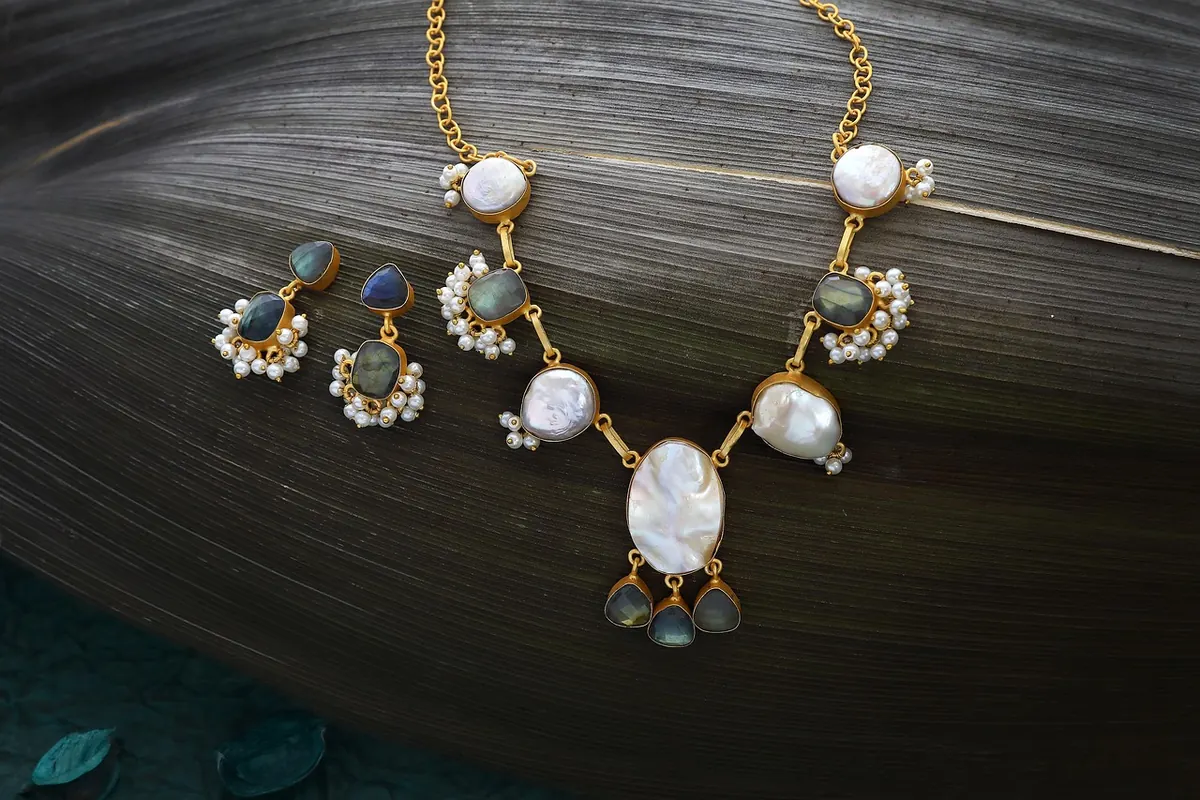
Photo: Rishika73978 / Pixabay