How to Choose a Gemstone Setting for Everyday Wear: Prongs, Bezels and More
A ring can look perfect in the shop window and still become a small daily worry within a month: a claw that catches on knitwear, a stone that works loose, a setting that traps soap under it every time you wash your hands. The setting is the part doing the real work. It holds the stone, absorbs knocks and decides how much light reaches the gem. Choosing it well comes down to matching three things — the stone itself, your habits, and what you can sensibly spend.
Start with the Stone, Not the Setting
Hardness on the Mohs scale tells you how easily a gem scratches, and it is the first filter for everyday wear. Diamond sits at 10, corundum — ruby and sapphire — at 9, quartz at 7. Anything at 7 or above will survive ordinary desk work, housework and hand-washing without dulling. Below that, a ring worn daily will slowly abrade, especially where a stone meets grit and glass.
Hardness is not the whole story, though. Toughness matters just as much, and some stones are famously brittle for their rating. Emerald is around 7.5 to 8 but full of internal fractures and often oiled, so it chips where a sapphire would shrug off the same knock. Topaz has perfect cleavage — one sharp blow along the wrong plane and it splits. Opal, moonstone and tanzanite are soft enough that a ring worn every day will show it. Pearls and opals also dislike perfume, hairspray and household cleaners, which is worth remembering if you never take your rings off.
- Comfortable for daily wear: diamond, sapphire, ruby, spinel, chrysoberyl.
- Fine with a little care: tourmaline, garnet, amethyst, citrine, jade, topaz.
- Better for occasional wear or a protective setting: opal, moonstone, tanzanite, emerald, pearl, fluorite.
The Main Settings and How They Behave
Claw or prong settings
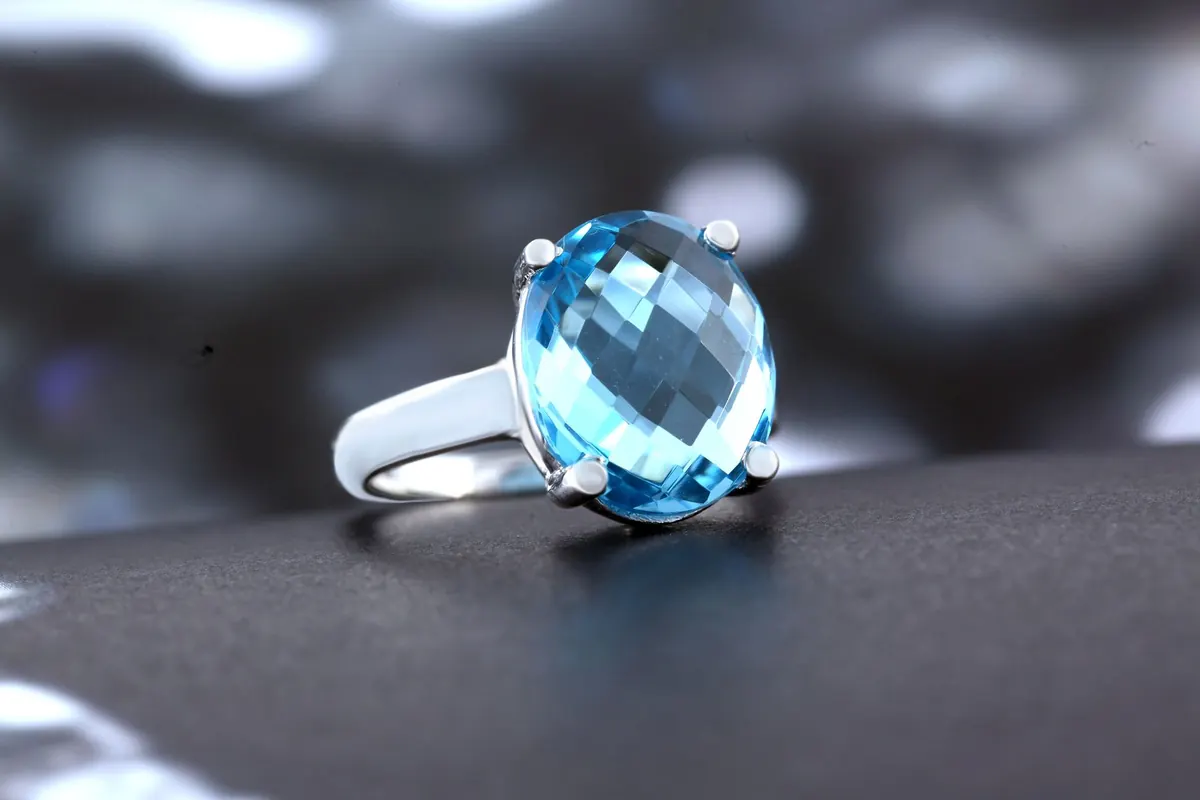
Four or six metal claws grip the stone at its edge, leaving most of the gem visible. It is the brightest option and the easiest to clean, which is why it dominates engagement rings. The trade-off is exposure. Claws snag on wool, hair and tights, and they wear down over years of use. Six claws hold more securely than four but block a little more light. If you go this route, ask for slightly heavier claws than the minimum — a few tenths of a millimetre of extra metal makes a real difference.
Bezel settings
A rim of metal wraps right around the stone's girdle. Nothing snags, nothing catches, and the edge of the gem is protected from chipping. The price is light: a bezel covers the outer edge, so a pale stone can look flatter and slightly smaller. For a soft or brittle gem worn daily — opal, moonstone, emerald — it is often the kindest choice available.
Flush, gypsy and channel settings
These sink the stone into the metal so only the table sits proud. Flush settings are ideal for small accent stones in a band you never take off; gypsy settings do the same for a single larger stone, traditionally in men's rings. Channel settings line up a row of square or baguette stones between two walls of metal. All three are low-profile and snag-free, but they need a jeweller to remove and reset a stone, and they can trap dirt along the channel, so a soft brush and warm soapy water now and then is not optional.
Tension and pavé
Tension settings hold a stone by compression between two sprung metal ends — dramatic, but they rely absolutely on the metal's spring, so they are not for brittle stones or for anyone who knocks their hands about. Pavé sets dozens of tiny stones with small beads of metal; beautiful, but each bead is a snag point and small stones can be lost without you noticing. Check pavé under a lamp every few months.
Matching the Setting to Your Actual Week
Think honestly about your hands rather than your Pinterest board. If you type all day, lift weights, garden, ride, work with animals or regularly tug on gloves, high-profile claw settings will annoy you. A bezel or flush setting sits close to the finger, slides under gloves and survives door handles.
Nurses, chefs, cleaners and anyone who washes their hands dozens of times a day should also consider what sits underneath: a closed-back setting traps moisture and soap, whereas an open-backed one lets water drain and makes cleaning easier. If your hands swell in warm weather, a slightly wider band and a low setting will feel steadier than a tall one that rotates.
Where the Budget Actually Goes
Two rings can hold identical stones and differ a lot in cost, because you are paying for metal, labour and small stones rather than for the design idea. A hand-cut bezel takes more workshop time than a standard four-claw head, and a pavé band with forty tiny diamonds will cost more in setting labour than the stones themselves. If money is tight, spend it on the stone and the security of the setting, and keep the design simple. A well-made plain band with a secure bezel will outlast a fussy setting that needs re-tipping every couple of years.
Metal choice matters for wear, too. Nine-carat gold is harder and more scratch-resistant than 18-carat or 22-carat because of its higher alloy content, though it may tarnish on some skin. Platinum is dense and burnishes rather than losing metal, so claws keep their shape longer. White gold usually needs re-plating periodically to stay bright.
A Short Checklist Before You Commit
- Ask what the stone's hardness and toughness mean for daily wear — and be honest about how you treat your hands.
- Run a fingernail or a tissue over the setting. If it catches, it will catch on clothing.
- Check the claws are thick enough to be re-tipped later rather than replaced.
- Confirm the ring can be resized. Channel and pavé bands often cannot, or only within narrow limits.
- Ask how the stone is cleaned and whether the setting allows it.
- Have the finished piece valued for insurance, and keep the paperwork.
A Practical Rule of Thumb
For a ring worn every day, choose the hardest stone you can afford and the most protective setting you find acceptable to look at. Claws for brilliance and easy cleaning, bezels and flush settings for security, channel and pavé for sparkle along the band — and low profiles for busy hands. Try before you buy, ideally wearing the ring for an hour in normal life, and buy from someone who will service it. A good jeweller will tell you plainly when a stone is a poor fit for daily wear, and that conversation is worth more than any glossy photograph. If the piece is valuable, speak to a qualified jeweller or valuer about insurance and long-term care before you wear it out of the shop.
Photo: The Glorious Studio / Pexels