
How to Identify Topaz vs Citrine and Aquamarine: A Beginner’s Visual Guide
Three stones, one tray, and a shop light doing its best to confuse you. Pale yellow citrine and pale yellow topaz sit within a shade of each other, while a light blue topaz and a pale aquamarine can pass as siblings from a metre away. The reassuring part is that these gems behave differently in ways you can see, feel and, with practice, measure. None of it requires a laboratory to start learning.
Colour is a starting point, not an answer
Citrine almost always carries a warm, slightly brownish or orange undertone. Even the palest lemon citrine looks a little honeyed next to topaz. Yellow topaz tends towards a cleaner, paler gold, and the finer material has a soft pink or sherry cast that citrine rarely imitates.
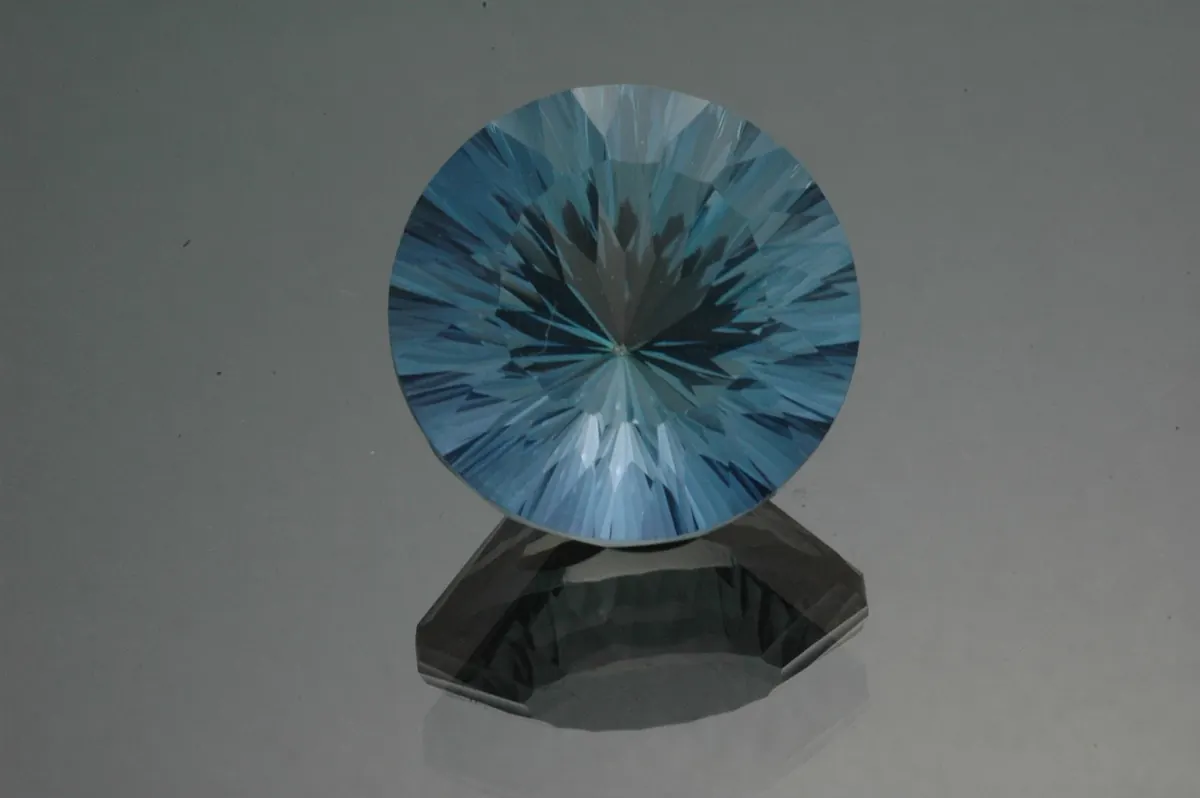
Blue is where people trip up. Blue topaz is usually an even, cool, slightly steely blue, often with impressive clarity. Aquamarine is softer and more often greenish-blue, and it is common to see a green flash in one direction and a cleaner blue in another. Citrine and yellow topaz share November as a birthstone, which is exactly why they end up in the same display case; aquamarine belongs to March.
Take any stone to a window and view it against plain white paper. Shop lighting flatters everything, and coloured backgrounds hide the very tints you are trying to spot.
Hardness and heft: the two tests you can trust at a stall
Topaz sits at 8 on the Mohs scale, quartz (citrine) at 7, and beryl (aquamarine) around 7.5 to 8. In theory, topaz scratches quartz; in practice, do not scratch a finished gemstone, yours or anyone else's. A scratched stone is a devalued stone, and a hardness test on a polished facet tells you very little that a loupe would not.
Heft is gentler and genuinely useful. Topaz has a specific gravity of roughly 3.5, so it feels noticeably dense in the hand for its size. Quartz is about 2.65 and beryl about 2.7, so both feel light by comparison. A round 8mm topaz will feel heavier than a citrine or aquamarine of the same diameter. Heft will not separate citrine from aquamarine, but it will separate topaz from both.
Under the loupe: what each stone tends to hold inside
Inclusions are the most reliable visual clue you can work with. A 10x loupe is enough for most of them.
- Topaz is often remarkably clean, which is itself a hint. When inclusions do appear, look for flat, mirror-like cleavage cracks with sharp straight edges, and fine two-phase fluid films or fingerprint trails that follow the stone's cleavage direction.
- Citrine frequently shows "breadcrumb" clusters of tiny white granules, especially in the heat-treated amethyst that makes up most of the market. Colour zoning is common, with a darker tip or patchy bands, and you may see twinning lines running through the stone.
- Aquamarine is famous for long, thin, straight growth tubes running parallel to the length of the crystal, sometimes called rain. Fingerprint veils and trapped crystals appear too. Richly tubed stones can look milky or, rarely, show a cat's-eye effect.
A stone that is spotless, dense and slightly "slippery" in lustre is far more likely to be topaz than citrine.
Reading the light: refractometer and pleochroism
If you are building a collection seriously, a refractometer settles most arguments in seconds. Topaz reads around 1.61–1.63, quartz around 1.544–1.553, and beryl around 1.577–1.583. Those ranges do not overlap, so a clear reading on a flat facet is almost conclusive.
Pleochroism helps too, though it needs a polarising filter or a good eye. Aquamarine shifts between blue and greenish-blue as you turn it. Topaz often shows two or three distinct tones, including a near-colourless view. Citrine is weakly pleochroic at best, shifting only from pale yellow to slightly deeper yellow.
Buying rough? Look at the crystal shape
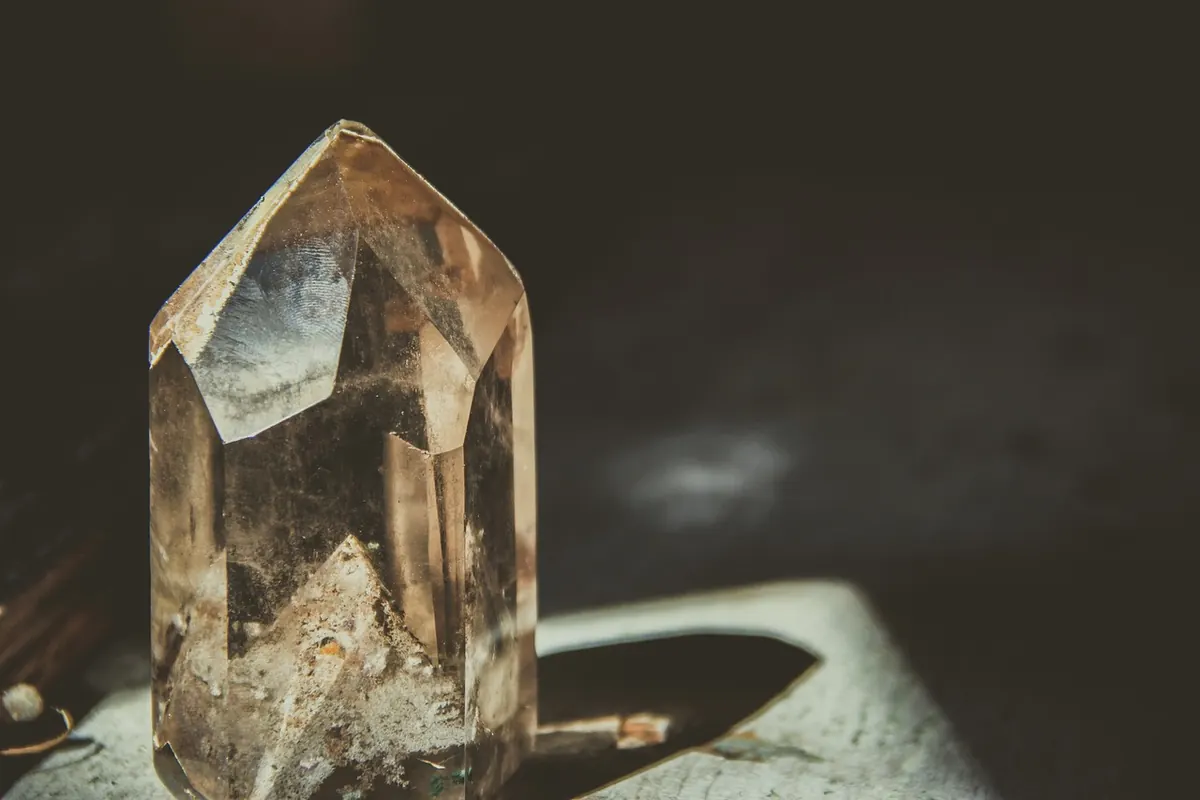
Crystals are far easier to identify than cut stones. Topaz forms orthorhombic prisms with wedge or chisel-shaped ends and fine striations running lengthwise along the faces. Quartz forms a six-sided prism ending in angled rhombohedral points, with striations running across the prism faces, not along them. Aquamarine is a six-sided beryl prism with flat, open ends like a pencil, again with lengthwise striations. Once you have handled a dozen of each, the difference in silhouette becomes obvious.
Treatments worth asking about
Almost all blue topaz on the market has been irradiated and often heated; natural blue topaz exists but is scarce and usually pale. Most commercial citrine is heat-treated amethyst. Aquamarine is commonly heated to remove the green. These treatments are standard and accepted, but they belong in the conversation. If someone describes a stone as untreated natural blue topaz at a modest price, ask questions before you agree to anything.
A practical routine before you buy
- View the stone loose, on white paper, in daylight. Ask the seller to remove it from the tray.
- Check the facet edges for chips. Flat, mirror-like breaks point towards topaz cleavage rather than a quartz fracture.
- Weigh it in your hand against a similarly sized stone you already own and know.
- Use your loupe on the pavilion and girdle, where inclusions are least polished away.
- Ask directly: what is this stone, and has it been treated? Get the answer on the receipt.
- If a large sum is involved, or the difference changes what you are willing to pay, commission an independent gemmological report from a recognised laboratory.
Handle topaz with a little care at home. That perfect cleavage means one sharp knock can split a stone along a flat plane, so skip the ultrasonic and steam cleaners and avoid sudden temperature changes. Citrine and aquamarine are more forgiving: warm water, a soft brush and a lint-free cloth will keep all three looking their best.
Photo: ha11ok / Pixabay