November 11, 2026



Every gambler has heard the phrase, usually from a smug friend who just watched them lose three hands of blackjack in a row. "The house always wins." It sounds like a law of physics, an unbreakable rule of the universe. But if the house always won, nobody would ever sit down at a poker table or spin a slot reel twice. The reality is far more interesting, and understanding it is the single biggest difference between a player who lasts and one who busts out in a weekend.
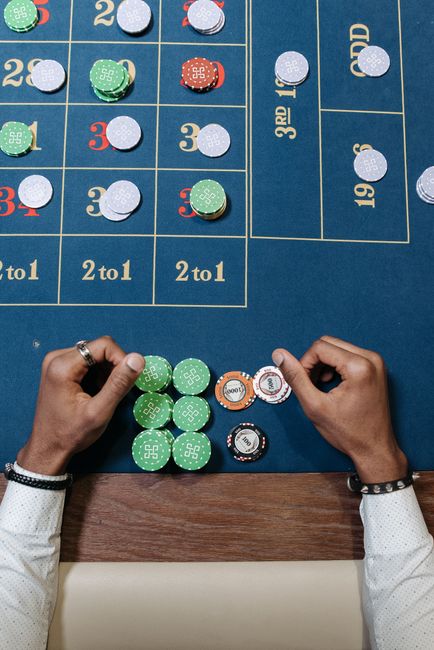
Let's kill the mystique right away. Casinos don't rely on luck. They rely on a tiny, predictable statistical edge baked into every game, known as the house edge. On a standard American roulette wheel, with its double zero, the house edge sits at roughly 5.26%. European roulette, with a single zero, cuts that to about 2.7%. Over millions of spins, that gap is what fills the casino's coffers.
The key word is millions. In any single session, a player can absolutely walk away up. The edge only reveals itself over massive sample sizes. This is why casinos encourage volume — more hands, more spins, more decisions means the math has more time to work. A player grinding 500 hands of blackjack an hour at a 0.5% house edge is donating far more in expected value than someone who plays 50 hands at the same table.
Slots work differently. Their edge lives in the RTP — return to player — percentage, which typically ranges from 92% to 97% on modern machines. That means for every $100 wagered, players collectively get $92 to $97 back. Individual sessions can be wildly volatile, which is the whole point of the entertainment, but the long-run math doesn't budge.
Not every game is a coin flip dressed up in felt. Some genuinely reward competence, and that's where smart players focus their attention.
The lesson is straightforward: if you want a chance at a genuine edge, play games where your decisions matter. If you're there purely for the thrill, be honest about it and budget accordingly.
Here's the uncomfortable truth the industry doesn't advertise. The math isn't what ruins most players — it's the psychology. Casinos and online platforms are engineered by brilliant people to keep you playing. Free drinks, comped rooms, flashing lights, celebratory sounds on near-misses, the dopamine hit of a bonus round. None of it is accidental. This is explained well on slot deposit 5000.
The near-miss is particularly devious. When two cherries land and the third stops one symbol short, your brain processes it almost identically to a win. You feel the rush, but your bankroll doesn't grow. Slot designers know this and calibrate reel layouts to produce a specific frequency of near-misses. Online platforms go further with autoplay features, one-click rebuys, and deposit bonuses that keep you in the action long past the point where a rational person would stop.
Variable ratio reinforcement — the same mechanism that makes social media addictive — is the engine underneath. You never know when the next win is coming, so you keep pulling the lever. Recognising this doesn't make you immune, but it does let you set hard limits before the session starts rather than negotiating with yourself mid-tilt.
Ask any successful bettor, poker grinder, or advantage player what separates them from the crowd, and you'll get the same answer: bankroll management. It's not sexy. It won't make a highlight reel. It's also the only thing standing between a bad night and a catastrophic one.
This isn't about being timid. It's about staying in the game long enough for variance to even out and skill, where it exists, to express itself. A player with a slight edge and terrible bankroll management goes broke. A player with no edge and excellent discipline loses slowly and predictably — which is still a loss, but at least it's a controlled one.
Online iGaming has democratised access, which cuts both ways. Legitimate, regulated operators now publish RTP figures, audit their random number generators through third parties like eCOGRA, and offer tools like deposit limits, self-exclusion, and reality checks. That transparency is genuinely valuable — you can look up the exact RTP of a specific slot before you play it, something impossible on a physical machine in a dimly lit casino.
The flip side is that unregulated offshore sites can advertise absurd bonuses, delay withdrawals indefinitely, or vanish with player funds. The warning signs are usually there: no licensing information, terms that cap withdrawals at bizarrely low amounts, customer support that only exists via email, and bonus wagering requirements so steep — think 40x or 50x the bonus amount — that clearing them is mathematically near-impossible for most players.
Before depositing anywhere, check the licence, read the withdrawal terms, and test customer support with a simple question. A legitimate operator answers quickly and clearly. The rest are hoping you won't ask.
The house edge is real, but it's a long-run statistic, not a guarantee about your Tuesday night. What actually determines your outcome is a mix of game choice, discipline, and the honesty you bring to your own limits. Play games where decisions matter, treat the money you bring as already spent, and never let a designed dopamine loop make choices for you. That's not defeatist — it's the most empowered position a player can hold. The people who understand the machine are the only ones who can enjoy it on their own terms.

For lovers of topaz gemstones and jewelry.
Copyright © 2026 Topaz Club. All rights reserved. Topaz Club.